Tetris
 Bunny Farm
 Longcat
 Mahjong Connect
 Helix Jump
 Bad Ice-Cream
 Stealing the Diamond
 Blocky Blast Puzzle
 Block Breaker
 Brick Breaker
 Block Blast Puzzle
 Color Block Jam
 Block Blaster
 Big Block Blast
 Paper Block
 Hexa Stack
 BlockBuster Puzzle
 Blocky Rush
 Xmas Block Blast
 Blox Puzzle
 Blox Slider
 Idle Breakout
 Hexa Puzzle
 Wood Block Journey
 Neon Block Blast
 2048
 Sandtris
 Cubes 2048
 Tomb of the Mask
 Candy Crush
 Bloxorz
 block Jam
 Bubble Shooter
 Tic Tac Toe
 Tetra Twist
 Water Sort Puzzle
 Bricky Blast
 Solitaire
 Suika Game
 Parking Rush
 Free The Key
 Level Devil
 Apple Worm
 Her Trees
 Uno Online
 Happy Glass
 Block Quest
 Bus Stop Jam
 Block Blast Jewel Puzzle
 Spider Solitaire
About Tetris
What Is Tetris?
Tetris is a puzzle game built around arranging geometric blocks on a limited playfield. Created by Alexey Pajitnov in 1984, the game follows a simple rule: move and rotate falling blocks to form complete horizontal lines. Once a line is filled, it disappears, creating more space for the next pieces.
Tetris focuses on the playfield, block shapes, and continuous movement from top to bottom. Without complicated missions or a lengthy storyline, the game still delivers a challenge through the changing pieces and available space. Each round creates a different arrangement, encouraging players to adjust their strategies instead of relying on a single approach.
Figure 1. One smart placement can change everything
Block Shapes
Classic Tetris uses seven basic block types, commonly known as Tetriminos. Each piece consists of four connected square cells, but their shapes and rotation options vary. Understanding the characteristics of each piece helps players choose suitable positions based on the current board layout.
- I Piece: Made up of four squares in a straight line, this piece can be placed horizontally or vertically. It is especially useful for filling a vertical gap to clear four lines at once.
- O Piece: A square made of four cells. Its shape stays the same when rotated, making it suitable for square gaps and relatively flat areas.
- T Piece: Features three cells in a row with one cell extending from the middle. This shape can fill various gaps, especially spaces with a central indentation.
- S Piece: Has a zigzag shape, with two cells in the upper row and two in the lower row shifted to one side. It works well for connecting sections of different heights.
- Z Piece: Has the reverse shape of the S piece. Players need to pay attention to its orientation to avoid creating gaps that are difficult to fill.
- J Piece: Contains three cells in a row with one cell extending downward at one end. It can fill corner spaces and areas with uneven heights.
- L Piece: Similar to the J piece, but its extra cell extends downward from the opposite end. This difference provides another option for adjusting edges and filling gaps.
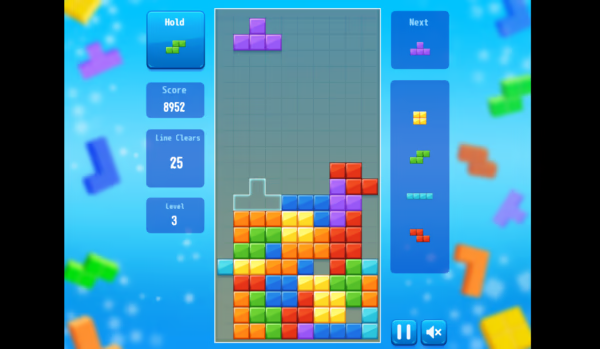
Figure 2. No two Tetris rounds need to feel the same
Speed and Game Over Conditions
Tetriminos appear at the top of the board and continuously fall downward. Players can adjust their positions and orientations before they land on the pieces below. In versions where difficulty increases over time, each piece becomes harder to manage as the falling speed rises, requiring quicker reactions and more precise planning.
The available space on the board determines how long a round can continue. If the blocks stack too high and prevent a new piece from entering the playfield, the game ends. Deep gaps between existing blocks can also cause problems because not every Tetrimino has the right shape to fill them.
How to Control Tetris
On a computer, Tetris typically uses the keyboard to move and rotate pieces. Common controls include:
- Left Arrow (←): Move the piece left.
- Right Arrow (→): Move the piece right.
- Up Arrow (↑): Rotate the piece.
- Down Arrow (↓): Increase the falling speed.
- Mouse: Use the mouse to interact with the game when supported by the version you are playing.
How to Clear Lines and Score Points
The main goal in Tetris is to fill every cell in a horizontal row. Once the row has no empty spaces, it disappears, and the blocks above it move downward. This process frees up space while creating more opportunities to place pieces and earn points.
The number of lines cleared in a single move affects scoring in many Tetris versions. There are four basic line clear types:
| Line Clear Type | Result |
|---|---|
| Single | Clears 1 line |
| Double | Clears 2 lines at once |
| Triple | Clears 3 lines at once |
| Tetris | Clears 4 lines at once |
Clearing multiple lines in one move usually earns more points than clearing them individually, depending on the scoring system used in the version you are playing. To perform a Tetris, players typically keep a vertical column open and wait for the I piece to appear. This strategy can lead to a substantial score bonus, but waiting too long also increases the risk of filling up the board.
Tips to Play Tetris Better
Keep the Surface Relatively Flat
A relatively flat board makes it easier to find suitable positions for incoming pieces. When one column rises much higher than the surrounding columns, placing the next pieces without creating additional gaps becomes more difficult. Deep holes between existing blocks can also be hard to fill because they often require a specific shape.
Prioritize placements that keep the board structure manageable. If a small gap appears, consider whether upcoming pieces can fill it before building higher in another area. This approach reduces difficult situations as the falling speed increases.
Leave Space for the I Piece
The I piece is especially valuable when aiming to clear four lines at once. Players can leave an empty column along one side of the board and build the surrounding rows until they are nearly complete. When the I piece appears, placing it in the prepared column can clear multiple lines if the remaining cells in all four rows are filled.
However, avoid stacking the board too high just to wait for the I piece. If it does not appear soon, continue clearing lines whenever possible and preserve enough room for other pieces. A flexible strategy is often more effective than forcing a large line clear at any cost.
Watch for Upcoming Pieces
If your version of Tetris displays the next piece, use that information to plan ahead. For example, knowing that an O piece is coming allows you to look for a suitable square gap. If an I piece is next, preparing an empty column may create an opportunity to clear several lines.
Looking ahead also helps you avoid placing the current piece in a position that makes the next move more difficult. Instead of focusing only on where the falling piece can fit, consider how it will affect the board's surface and the remaining gaps.
Tetris requires a balance between quick decisions and longer-term planning. By keeping the board organized, using each piece's shape effectively, and watching upcoming pieces, players can manage space more efficiently, extend their runs, and improve their scores over time.
You can play: