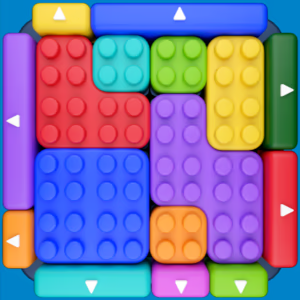
Color Block Jam
 Bunny Farm
 Longcat
 Mahjong Connect
 Helix Jump
 Bad Ice-Cream
 Stealing the Diamond
 Blocky Blast Puzzle
 Block Breaker
 Brick Breaker
 Block Blast Puzzle
 Block Blaster
 Tetris
 Hexa Stack
 Big Block Blast
 Paper Block
 BlockBuster Puzzle
 Blocky Rush
 Xmas Block Blast
 Blox Puzzle
 Blox Slider
 Idle Breakout
 Hexa Puzzle
 Wood Block Journey
 Neon Block Blast
 2048
 Sandtris
 Cubes 2048
 Tomb of the Mask
 Candy Crush
 Bloxorz
 block Jam
 Bubble Shooter
 Tic Tac Toe
 Tetra Twist
 Water Sort Puzzle
 Bricky Blast
 Solitaire
 Suika Game
 Parking Rush
 Free The Key
 Level Devil
 Apple Worm
 Her Trees
 Uno Online
 Happy Glass
 Block Quest
 Bus Stop Jam
 Block Blast Jewel Puzzle
 Spider Solitaire
Color Block Jam - Solve Color Block Puzzles with Strategy
Color Block Jam is a puzzle game that challenges players to move colored blocks toward their matching exit doors. The task seems simple at first, but things get harder as more blocks appear on the board and block each other's paths. To complete each level, players need to study the layout, find suitable routes, and choose the right order for moving the blocks.
What makes the game interesting is how the blocks interact with each other. One block might have a clear path to its exit, but moving it right away may not be the best choice if it gets in the way of other blocks. Sometimes, players need to clear a path or move a blocking piece before they can make progress toward their goal.
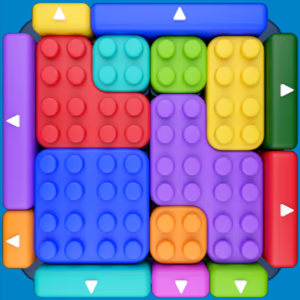
Figure 1. Color Block Jam offers a fresh challenge for players
Color Block Jam Graphics and Player Experience
Visual Design
The game features geometric blocks in bright colors, making it easy to tell each block apart and identify its matching exit. The version featured on Slope3 uses 3D graphics, giving the blocks a sense of height and depth instead of making them look like flat shapes.
The layout focuses on the blocks, open spaces, and exit doors. This clear presentation helps players quickly identify each object, spot blocked paths, and find suitable moves. Colors do more than make the interface look appealing. They also play an important role in solving each puzzle.
Gameplay Pace
The gameplay combines simple controls with decisions that require careful thought. Levels with fewer obstacles help players get used to moving the blocks and identifying their targets. When blocks sit close together or occupy key positions, finding a clear path becomes more challenging.
The challenge is not about moving as fast as possible. It is about predicting the outcome of each move. A smart decision can open up more space, while a poorly planned move can make it harder for other blocks to reach their exits.
Accessibility
The intuitive controls make it easy for new players to understand the objective without memorizing complicated key combinations. However, learning how to move the blocks is only the first step. To solve more complex layouts, players need to know when to move a block, when to leave it in place, and how to make the most of the available space.
Color Block Jam Gameplay
The main mechanic revolves around moving each block to an exit of the same color. Every block occupies a specific position, so moving one piece can directly affect the paths available to others.
Before making a move, consider three factors:
- Block Positions: Identify which blocks are blocking the way and which ones can move freely.
- Paths to the Exits: Check whether a route is clear or if an obstacle needs to be moved first.
- Available Space: Consider where a block will end up and how its new position might affect later moves.
How to Play Color Block Jam
Main Objective
The main goal is to move the colored blocks to their matching exits to complete each level. Players need to find a way to move every block through the existing layout without letting other blocks get in the way.
Controls
- Computer: Use the mouse to select and drag blocks if the version supports drag and drop.
- Mobile: Tap and swipe blocks in the desired direction if the interface supports touch controls.
Obstacles and Special Mechanics in Color Block Jam
Obstacles
Obstacles limit movement or occupy spaces needed to open a path. When a block cannot move in the desired direction, check the surrounding pieces and figure out which one needs to move first. Clearing the right space is often more useful than trying to push a blocked piece through an unavailable route.
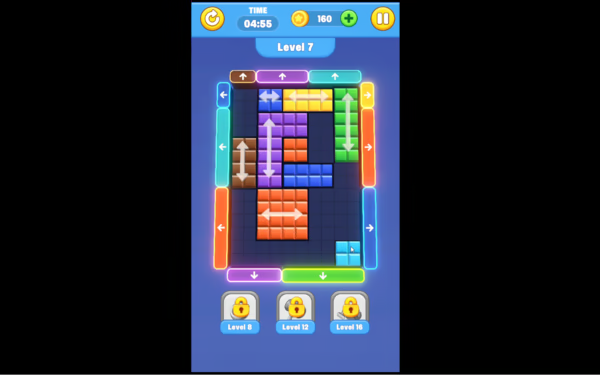
Figure 2. Similar obstacles become increasingly difficult to overcome
Color Matching Exits
Each block must reach an exit of the matching color. Players need to keep track of both the positions and colors of the pieces to avoid choosing the wrong target. A block may be close to its exit, but its path can still be blocked by other pieces.
Limited Movement Paths
When blocks are packed closely together, one move can take away space needed for later actions. Identify important routes and consider the order of movement before sending blocks to their destinations. The block closest to an exit does not always need to be moved first.
Common Color Block Jam Problems and How to Fix Them
A Block Cannot Move
Check whether an obstacle is blocking its path. If the route is not clear, find a way to free up the required space before trying again.
Not Sure Which Block to Move First
Start by identifying the blocks that are blocking important paths. Moving the right piece can open up more options for the rest of the board.
Repeatedly Choosing the Wrong Direction
Do not judge a move only by whether it brings a block closer to its exit. Consider the entire board after the move. An effective move should help solve the current problem without making the remaining blocks harder to handle.
With easy to understand mechanics that still require careful planning, Color Block Jam offers a puzzle experience built around colors, space, and move order. Studying each layout and thinking about the impact of every move can help players find better solutions instead of relying on random attempts.
From finding paths for individual colored blocks in Color Block Jam to arranging pieces to complete rows and columns, Block Blast offers a different kind of puzzle challenge, where space management and block placement determine how many points you can score.