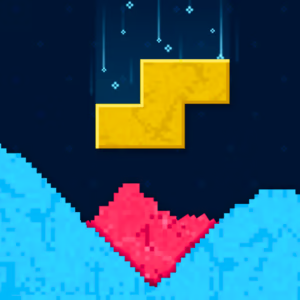
Sandtris
 Bunny Farm
 Longcat
 Mahjong Connect
 Helix Jump
 Bad Ice-Cream
 Stealing the Diamond
 Blocky Blast Puzzle
 Block Breaker
 Brick Breaker
 Block Blast Puzzle
 Color Block Jam
 Tetris
 Block Blaster
 Big Block Blast
 Paper Block
 Hexa Stack
 Blocky Rush
 BlockBuster Puzzle
 Xmas Block Blast
 Blox Puzzle
 Blox Slider
 Idle Breakout
 Hexa Puzzle
 Wood Block Journey
 Neon Block Blast
 2048
 Cubes 2048
 Tomb of the Mask
 Candy Crush
 Bloxorz
 block Jam
 Bubble Shooter
 Tic Tac Toe
 Tetra Twist
 Water Sort Puzzle
 Bricky Blast
 Solitaire
 Suika Game
 Parking Rush
 Free The Key
 Level Devil
 Apple Worm
 Her Trees
 Uno Online
 Happy Glass
 Block Quest
 Bus Stop Jam
 Block Blast Jewel Puzzle
 Spider Solitaire
Sandtris - When Falling Blocks Turn Into Sand
Sandtris combines block stacking with the movement of sand, creating a puzzle experience that feels different from other games in the genre. Colored blocks fall from the top of the board and break into tiny particles when they land. Gravity pulls the sand downward, filling gaps and forming new terrain. As a result, every drop can change the layout of the board.
What makes Sandtris stand out is that players cannot rely solely on a block's original shape to plan their moves. Once the block lands, its sand particles keep moving and can form different clusters of color. Players need to consider where to drop each block, watch how the sand shifts, and keep enough space available on the board. The combination of block stacking and physics based movement means every decision can affect the moves that follow.
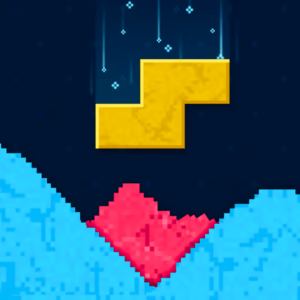
Figure 1. Sandtris puts a fresh spin on block puzzles
The Art of Connecting Colors in Sandtris
The main goal in Sandtris is to connect sand particles of the same color into a continuous line stretching from the left edge to the right edge of the board. Once this condition is met, the connected sand disappears, freeing up space for incoming blocks. Players need to pay attention to the position of each color cluster and find the best opportunities to create a successful connection.
Matching colors depends on more than just where a block lands. It also involves how the sand spreads after hitting the surface. Particles can slide into lower areas, fill gaps, or form uneven piles. As a result, clusters that appear close together may not create a complete line. Players need to study the current terrain and predict how the sand will move before making a decision.
Space management is another important part of the game. If sand builds up too high in one area, placing the next blocks becomes more difficult. Prioritizing connections that are likely to be completed and making use of newly cleared space can help keep the board manageable. Once players understand how the sand moves, they can plan color placements more effectively and adjust their strategies as needed.
How to Play Sandtris?
Master the Core Gameplay
In Sandtris, colored blocks fall onto the board one after another, and players can adjust their positions before they land. Once a block touches the surface, it turns into tiny sand particles that scatter under gravity. The goal is to use this movement to connect particles of the same color into a continuous line from left to right. When a valid connection forms, the corresponding sand disappears, creating more room for future moves.
To play effectively, watch the color clusters already on the board instead of focusing only on the next falling block. Identify areas that need more of a particular color, and consider how the terrain might affect the direction of the sand. If a drop causes sand to pile up in an unfavorable spot, creating connections with later blocks may become more difficult. Combining observation, prediction, and careful placement helps you maintain better control of the board.
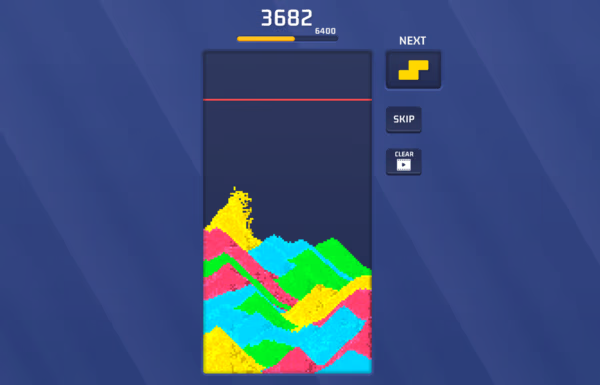
Figure 2. Sandtris takes block stacking
Controls
- Keyboard: Use the arrow keys to control the blocks. Press the Left or Right Arrow to move a block horizontally, the Up Arrow to rotate it, and the Down Arrow to make it fall faster.
- Mouse: Use the mouse to control the blocks. Click and drag left or right to adjust a block's position, or click to rotate it.
When Does the Game End?
During gameplay, sand continues to accumulate whenever players fail to create color connections that clear space. As the sand rises and the area available for incoming blocks becomes smaller, arranging new pieces gets harder. Keeping open space available and clearing color clusters at the right time are therefore key to making each run last longer.
Sandtris vs. Tetris: What Makes the Gameplay Different?
Sandtris and Tetris both belong to the block stacking genre, but they differ significantly in how pieces behave and how players solve puzzles. In traditional Tetris, blocks keep their original shapes after landing. Players rotate and arrange them to complete horizontal rows. Once a row is filled, it disappears and creates space for the next pieces.
Sandtris changes this mechanic by turning blocks into sand particles when they land. The particles move under gravity, slide into gaps, and form new terrain. Instead of focusing on completing horizontal rows with solid blocks, players must connect particles of the same color from the left edge to the right edge of the board. The sand's constant movement makes the layout harder to predict and forces players to adjust their strategies to the situation.
The difference also affects how players plan their moves. In Tetris, players mainly consider each block's shape and the available gaps when choosing where to place it. In Sandtris, they must also account for how the sand might slide after landing. Both games require spatial reasoning, but Sandtris puts greater emphasis on predicting movement and connecting colors.
Can You Play Sandtris Online for Free?
Sandtris is available on online gaming platforms such blockblast3d.com. Players can visit a game's webpage through a browser and start playing without installing a separate app.
With its block to sand mechanic, clear color matching objective, and constant demand for space management, Sandtris offers a fresh take on the block stacking genre. The game is a good fit for players who want to test their observation, prediction, and strategic thinking skills through puzzles where the layout changes with every move.