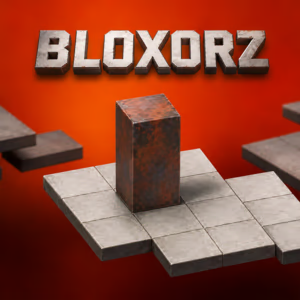
Bloxorz
 Bunny Farm
 Longcat
 Mahjong Connect
 Helix Jump
 Bad Ice-Cream
 Stealing the Diamond
 Blocky Blast Puzzle
 Block Breaker
 Brick Breaker
 Block Blast Puzzle
 Color Block Jam
 Block Blaster
 Tetris
 Hexa Stack
 Big Block Blast
 Paper Block
 BlockBuster Puzzle
 Blocky Rush
 Xmas Block Blast
 Blox Puzzle
 Blox Slider
 Idle Breakout
 Hexa Puzzle
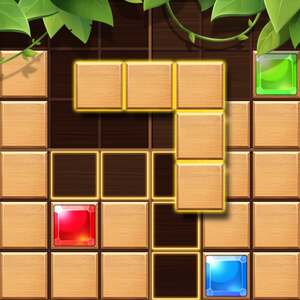 Wood Block Journey
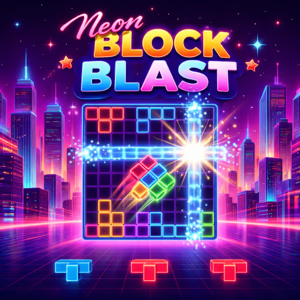 Neon Block Blast
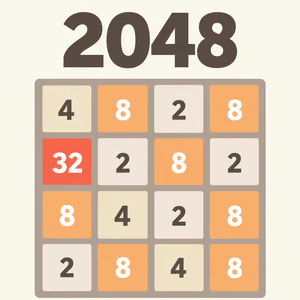 2048
 Sandtris
 Cubes 2048
 Tomb of the Mask
 Candy Crush
 Bubble Shooter
 block Jam
 Tetra Twist
 Tic Tac Toe
 Water Sort Puzzle
 Bricky Blast
 Solitaire
 Suika Game
 Parking Rush
 Free The Key
 Level Devil
 Apple Worm
 Her Trees
 Uno Online
 Happy Glass
 Block Quest
 Bus Stop Jam
 Block Blast Jewel Puzzle
 Spider Solitaire
The Development of Bloxorz
Bloxorz Was Released in 2007
Bloxorz was released in 2007 and developed by Damien Clarke under DX Interactive. It became one of the standout browser puzzle games of the Flash era, attracting players with its concept of controlling a rectangular block across small floating platforms to find a path to the goal.
One of the game's defining features is how the block changes its position after each move. It can stand upright on a single tile or lie horizontally across two adjacent tiles. These changes directly affect which areas the block can reach and which switches it can activate on the board. Players must plan each move carefully to keep the block on the path and guide it into the square hole at the end of the level.
The Story Behind the Floating Blocks
Inside an architectural research center, a team of engineers is assigned to build a bridge connecting two areas on opposite sides of a deep canyon. The structure uses identical square metal plates assembled into narrow paths across wide open spaces.
During testing, the engineers realize that building a safe route depends on more than the number of metal plates. Placement, weight distribution, and connection points are the factors that determine the stability of the entire structure.
Some platforms can only support objects lying horizontally, while others require weight to be concentrated at a single point to activate a locking system. Bridge control switches are also placed in hard-to-reach locations, requiring testers to calculate every movement precisely.
These challenges lead to the creation of a spatial reasoning test. Participants must find a way to move a metal block across the platform system, activate the correct switches, and avoid areas that cannot support its weight. Each completed route demonstrates how a small movement can determine the success of the entire journey.
Bloxorz Design Style
Bloxorz features minimalist 3D graphics with an isometric perspective. This view allows players to see the length, width, and height of the platforms at the same time. The tiles form floating paths, making the layout easy to understand and helping players identify positions across the level.
The main character is a rectangular block with a metallic surface and sharp edges. Its design avoids unnecessary decorative details and focuses on the block's shape and position during movement. When it rolls left, right, forward, or backward, the block continuously changes how it rests on the floor, making its current state easy to recognize.
Colors help distinguish important elements. Platforms generally use gray tones, while the metallic block stands out against the dark background. Orange tiles and switches have distinct appearances that make their functions easier to identify. The goal hole is also placed in a visible position, serving as the main destination in each level.
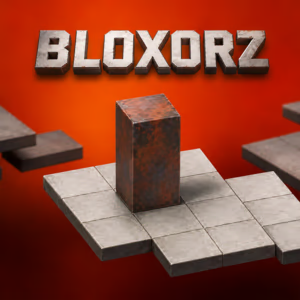
Figure 1. Bloxorz offers a variety of mechanics to explore
How to Play Bloxorz
Main Objective
The main objective in Bloxorz is to guide the rectangular block across the platforms and drop it into the square hole at the end of each level. The block is equivalent in size to two connected square tiles, so its position determines how many floor tiles it covers.
Movement Mechanics and Block Controls
Bloxorz has three basic block positions. Recognizing each one helps players predict where the block will land and choose the right direction.
- Standing Upright: The block occupies a single tile. This position is required to enter the goal hole and activate X-shaped switches.
- Lying Horizontally Along Its Length: The block covers two adjacent tiles in the same row. This position allows it to cross certain sections of the path.
- Lying Horizontally Along Its Width: The block covers two adjacent tiles in a direction perpendicular to its previous horizontal position. Players must check its landing position to avoid slipping off the platform.
Controls
Use the arrow keys to move the block.
Switches and Special Tiles
Switches and special tiles are important parts of Bloxorz. Each type has its own activation rules, requiring players to position the block correctly.
Round Switch (Soft Switch)
A round switch activates when any part of the block touches its surface. The block can be upright or lying horizontally to trigger this switch. Once activated, it can open or close bridges connecting different areas of the map, creating new paths for further movement.
X-Shaped Switch (Hard Switch)
An X-shaped switch requires the block to stand upright on a single tile to activate it. A horizontal position does not meet this condition. Players must calculate the direction of movement and adjust the block's position before reaching the switch.
Split Switch
A Split Switch can divide the rectangular block into two smaller square blocks and send them to different positions. When this mechanic appears, players use the Space key to switch between the two blocks and control each one independently. The smaller blocks can activate round switches, but they do not have enough weight to activate X-shaped switches.
Fragile Tiles
Fragile Tiles are orange platforms with limited weight capacity. Their surfaces collapse when the block stands upright on them. To cross these areas safely, players must keep the block horizontal so its weight is distributed across two adjacent tiles.
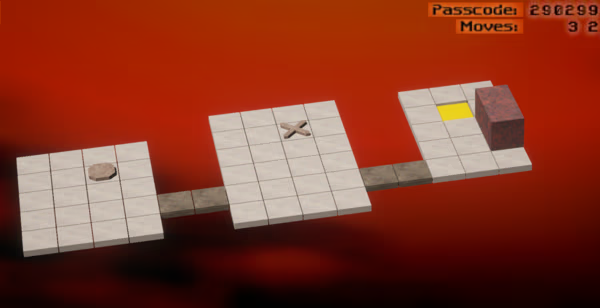
Figure 2. A rolling block, navigate tricky platforms, operate switches
Bloxorz Level System
Bloxorz features a total of 33 levels with gradually increasing difficulty. The early stages focus on helping players learn how to roll the block, change its position, and keep it on the platforms. As they progress, players must combine different mechanics, including switches, bridges, fragile tiles, and block splitting, to find the correct route.
Each level has a unique layout with different platform positions and goal locations. A six-digit passcode system lets players save their level codes and return to the corresponding stage in later sessions. This makes it easier to focus on difficult puzzles without restarting the entire game.
Discover More with Block Blast
Bloxorz focuses on moving a rectangular block across platforms and guiding it to the correct destination. With 33 levels and a system of switches, bridges, and special tiles, the game offers puzzles built around block movement and positioning.
Another option for puzzle fans is the 3D version of Block Blast. The game features pieces made up of multiple small square cells in different shapes. Players drag and drop each piece onto the board, arranging them to complete horizontal rows or vertical columns. Once a row or column is filled, all the blocks in that area disappear, opening up space for the next pieces.
Block Blast presents its board in a three-dimensional space, showing the height and visible sides of each block. Outlines, lighting, and shadows make the pieces easier to distinguish while arranging them. The game is available directly through the browser at blockblast3d.com, with no download required. Visit the site to try the block stacking gameplay, explore different placement strategies, and improve your score with every round.